2026 News
Visit us at the IEEE EMBC 2026 Conference
July 27, 2026
Come say hello at the PhysioNet booth! We're excited to meet members of the community, discuss PhysioNet resources, and hear about your work. You can also access our conference information and resources here: https://physionet.org/about/embc-2026/.
Remembering Roger G. Mark
July 16, 2026
It is with profound sadness that we share the news that Roger Greenwood Mark, MD, PhD, has died at the age of 87. Roger was Professor Emeritus in the MIT Institute for Medical Engineering and Science (IMES) and the Department of Electrical Engineering and Computer Science (EECS).
For those of us at PhysioNet and the MIT Laboratory for Computational Physiology, this is a deeply personal loss. We were fortunate to know Roger as a colleague, mentor, and friend, but his influence extended far beyond our team. Across the Harvard-MIT Program in Health Sciences and Technology (HST), MIT, and the wider biomedical research community, generations of students, researchers, and colleagues benefited from his guidance and generosity.
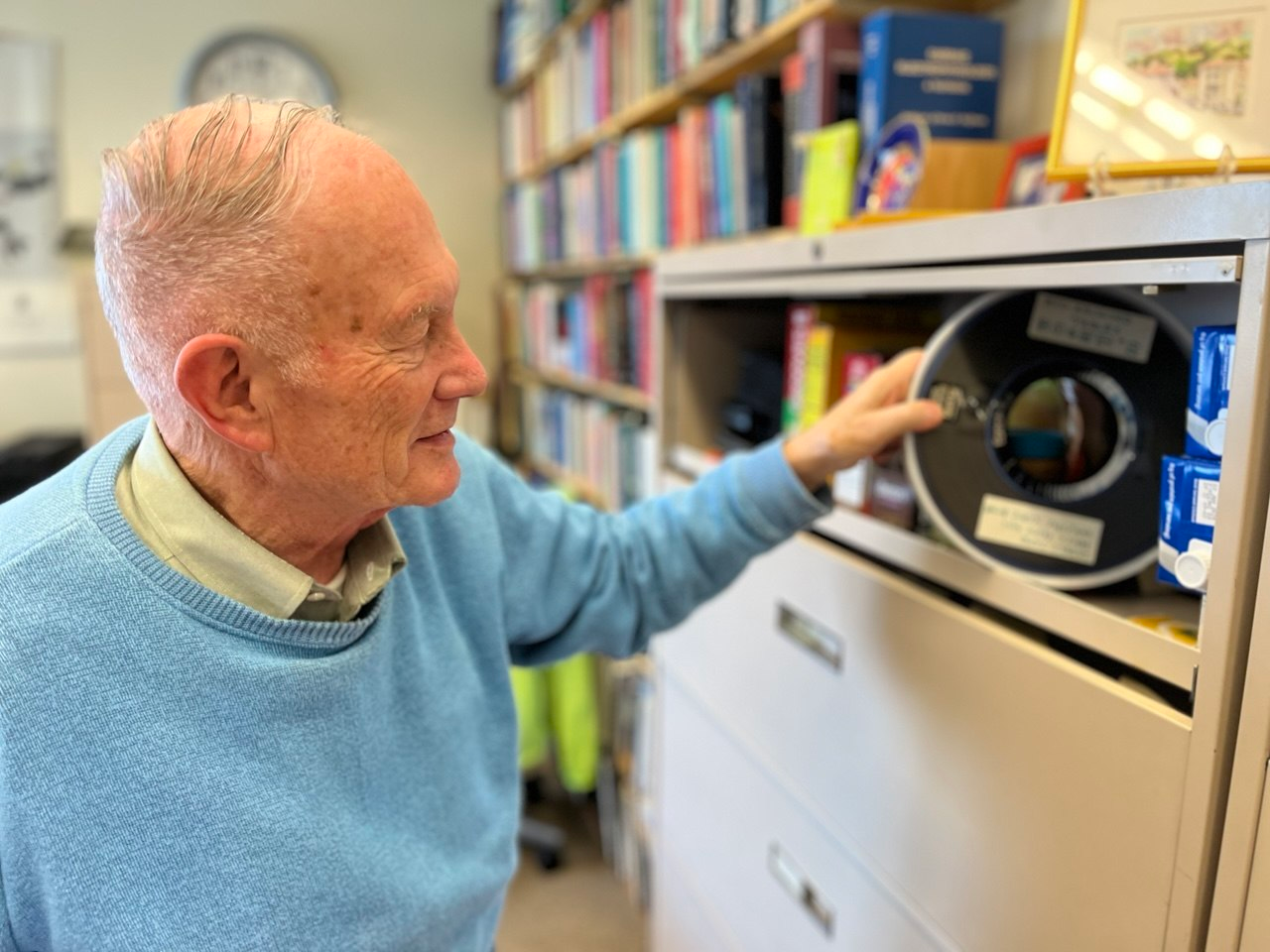
Having received his SB (1960) and PhD (1966) from MIT, and his MD (1965) from Harvard Medical School, he was an “MIT lifer,” spending essentially his entire professional life at MIT. At MIT, where he was recognized with several distinguished professorships throughout his career, Roger played a central role in HST, serving as its Co-Director from 1985 to 1995 and helping to develop its curriculum in quantitative physiology early in his career. Some of the courses Roger developed are still central to the life-science curriculum in MIT’s School of Engineering.
Devoting his research career to making biomedical data accessible in service of better health worldwide, Roger championed free and open data sharing long before these principles were widely embraced. In a 2017 HST faculty profile, he explained the belief guiding this work: “There are lots of smart, creative people, but getting access to clinical and physiological data is extremely difficult. Data should be available for use by essentially the entire world community of research people.”
Among his many contributions, Roger worked with George Moody to develop the groundbreaking and widely used MIT-BIH Arrhythmia Database and to establish PhysioNet. In recognition of this work, Roger and George received the 2026 IEEE Biomedical Engineering Award. Launched online in 1999, PhysioNet made physiological data and open-source software freely available to researchers around the world. This formed part of the NIH-funded Research Resource for Complex Physiological Signals, which Roger led with Ary Goldberger of Beth Israel Deaconess Medical Center.
Roger will be remembered as a generous collaborator and a thoughtful, steadfast mentor who advised countless HST students, lab colleagues, and others. Roger and his wife, Dottie, also served as the founding Heads of House of MIT’s Sidney-Pacific graduate residence for 10 years, where they fostered a community of some 750 graduate students from more than 50 countries. He touched lives and careers in a way that had a profound effect on many at MIT and beyond.
We will share further reflections on Roger’s life and work in the coming weeks.
Delays in reviewing applications for credentialed access
June 18, 2026
As a result of staffing changes in our research group, applications for credentialed access are likely to be subject to significant delays. We are doing our best to deal with the waitlist quickly, handling applications in the order in which they are received. To help ensure that your application is successful, please remember to:
- Include a copy of your CITI training report (not the certificate).
- Remind your reference to reply promptly when contacted.
- Check your application details are correct before submitting.
- Add an institutional or educational email address as your primary email.
We apologize for the inconvenience. Please bear with us during this busy time!
Nature Health paper highlights PhysioNet’s global impact
April 6, 2026
A new paper in Nature Health highlights the role of PhysioNet as a global platform for biomedical research.
In "PhysioNet as a global platform for biomedical research," we reflect on 25 years of PhysioNet, from its early foundations to its current role in enabling biomedical and clinical research worldwide. The article describes how PhysioNet has helped to support tens of thousands of research papers and outlines future priorities including secure data sharing, community engagement, and scalable research infrastructure.
Read more: https://rdcu.be/faatM
PhysioNet featured by MIT Jameel Clinic
April 6, 2026
PhysioNet has been featured in a new MIT Jameel Clinic story marking the platform’s 25th anniversary.
The article, “PhysioNet at 25: The Open-Source Engine Behind Modern AI in Medicine,” reflects on the origins of PhysioNet, its growth into a global resource for biomedical and clinical research, and its continuing role in supporting open data, reproducible science, and clinical AI.
Read more: https://jclinic.mit.edu/physionet-at-25/
Raw Audio Data Access for Bridge2AI Voice Adult Cohort is via Synapse
News from: Bridge2AI-Voice: An ethically-sourced, diverse voice dataset linked to health information v3.0.0.
March 9, 2026
The published Bridge2AI-Voice Adult Dataset contains derived features from the audio waveforms. This PhysioNet project does not contain raw audios.
Accessing raw audio is a more involved process and requires institutional sign off. Please reach out to the access committee if you are interested in access: DACO@b2ai-voice.org
Data will be made available via Synapse: https://www.synapse.org/Synapse:syn72370534/
For questions regarding the dataset itself, please contact the corresponding author, listed on the sidebar.
Note that the Bridge2AI-Voice Pediatric Dataset is also available on PhysioNet: https://physionet.org/content/b2ai-voice-pediatric/
Read more: https://www.synapse.org/Synapse:syn72370534
Raw Audio Data Access for Bridge2AI Voice Pediatric Cohort is via Synapse
News from: Bridge2AI-Voice Pediatric Dataset v1.0.0.
March 9, 2026
The published Bridge2AI-Voice Pediatric Dataset contains derived features from the audio waveforms. This PhysioNet project does not contain raw audios.
Accessing raw audio is a more involved process and requires institutional sign off. Please reach out to the access committee if you are interested in access: DACO@b2ai-voice.org
Data will be made available via Synapse: https://www.synapse.org/Synapse:syn73617068
For questions regarding the dataset itself, please contact the corresponding author, listed on the sidebar.
Note that the Bridge2AI-Voice Adult Dataset is also available on PhysioNet: https://physionet.org/content/b2ai-voice/
Read more: https://www.synapse.org/Synapse:syn73617068
Announcing the George B. Moody PhysioNet Challenge 2026
Feb. 12, 2026
The George B. Moody PhysioNet Challenge 2026 is officially underway. The 2026 Challenge invites teams to develop algorithms for using polysomnograms (PSGs) to predict cognitive impairment from sleep studies.
Sleep is a fundamental physiological process that is deeply intertwined with human health. Traditionally, clinicians use sleep studies to diagnose obstructive sleep apnea, insomnia, and other sleep disorders. However, sleep studies can also reveal other chronic conditions that cause, are caused by, or are correlated with physiological changes in sleep. These findings can provide context to sleep disorders and inform the early diagnosis and treatment of other health conditions.
We have shared multicenter Challenge training data containing EEG, ECG, and other physiological signals and algorithmic and human sleep annotations as well as an example Challenge entry that you can use as a template for your entries. We will open the scoring system in the coming days.
Please see the Challenge website for the data, code, and more information, rules, and deadlines: https://moody-challenge.physionet.org/2026/.
As in previous years, we have divided the Challenge into two phases: an unofficial phase and an official phase. The unofficial phase solicits feedback from the research community (i.e., you) to help us improve the Challenge for the official phase, so we require teams to register and participate in the unofficial phase of the Challenge for prize eligibility. Please enter early and often – we need you to look for quirks in our data, our scoring system, and otherwise. We are imperfect (and bandwidth-limited), so please send us comments, issues, and suggestions via the Challenge forum (see below). We rely on the community to help us to improve the quality of the Challenge each year.
The culmination of the Challenge will be in Spain at the annual meeting of Computing in Cardiology, where we will present prizes at the closing ceremony.
We will post more information on the PhysioNet Challenge website and Challenge forum as it becomes available, or when your input helps us modify the boundaries and content of the Challenge. You may (and should) post questions and comments onthe Challenge forum. However, if your question reveals information about your entry, then please email info [at] physionetchallenge.org instead to help ensure each entry is as independent as possible (*).
We thank you for your continued interest and support, and we hope that you enjoy the 2026 Challenge!
https://PhysioNetChallenges.org/
https://PhysioNet.org/
[* The info [at] physionetchallenge.org address is monitored by a team. We will not answer emails about the Challenge which are sent to individual organizers of the Challenge (or any other part of the PhysioNet Resource) or any affiliated events (such as Computing in Cardiology). We may share parts of our replies publicly if we feel that all Challengers should benefit from the information contained in our responses.]
Read more: https://moody-challenge.physionet.org/2026/