Remembering Roger G. Mark
July 16, 2026
It is with profound sadness that we share the news that Roger Greenwood Mark, MD, PhD, has died at the age of 87. Roger was Professor Emeritus in the MIT Institute for Medical Engineering and Science (IMES) and the Department of Electrical Engineering and Computer Science (EECS).
For those of us at PhysioNet and the MIT Laboratory for Computational Physiology, this is a deeply personal loss. We were fortunate to know Roger as a colleague, mentor, and friend, but his influence extended far beyond our team. Across the Harvard-MIT Program in Health Sciences and Technology (HST), MIT, and the wider biomedical research community, generations of students, researchers, and colleagues benefited from his guidance and generosity.
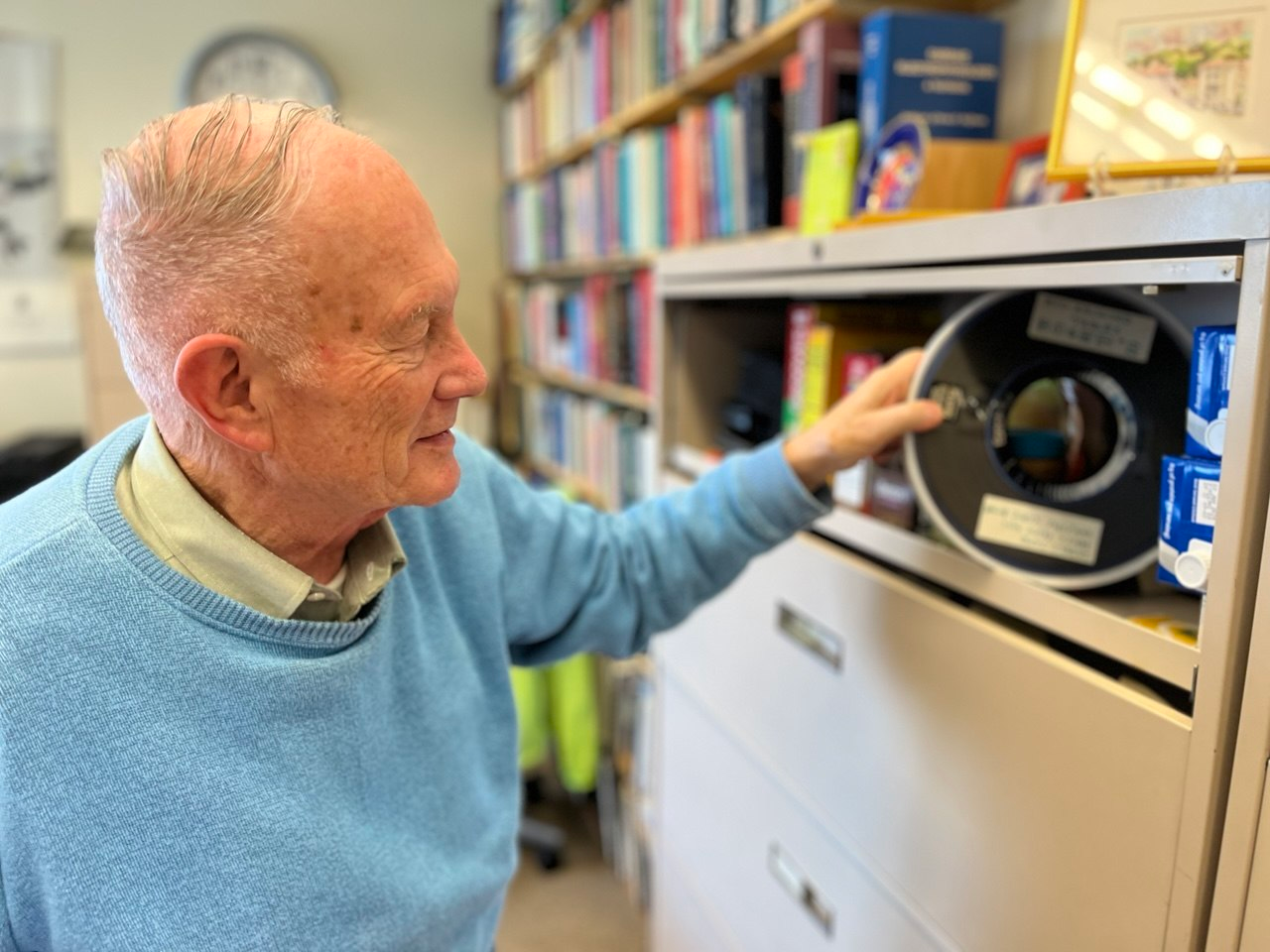
Having received his SB (1960) and PhD (1966) from MIT, and his MD (1965) from Harvard Medical School, he was an “MIT lifer,” spending essentially his entire professional life at MIT. At MIT, where he was recognized with several distinguished professorships throughout his career, Roger played a central role in HST, serving as its Co-Director from 1985 to 1995 and helping to develop its curriculum in quantitative physiology early in his career. Some of the courses Roger developed are still central to the life-science curriculum in MIT’s School of Engineering.
Devoting his research career to making biomedical data accessible in service of better health worldwide, Roger championed free and open data sharing long before these principles were widely embraced. In a 2017 HST faculty profile, he explained the belief guiding this work: “There are lots of smart, creative people, but getting access to clinical and physiological data is extremely difficult. Data should be available for use by essentially the entire world community of research people.”
Among his many contributions, Roger worked with George Moody to develop the groundbreaking and widely used MIT-BIH Arrhythmia Database and to establish PhysioNet. In recognition of this work, Roger and George received the 2026 IEEE Biomedical Engineering Award. Launched online in 1999, PhysioNet made physiological data and open-source software freely available to researchers around the world. This formed part of the NIH-funded Research Resource for Complex Physiological Signals, which Roger led with Ary Goldberger of Beth Israel Deaconess Medical Center.
Roger will be remembered as a generous collaborator and a thoughtful, steadfast mentor who advised countless HST students, lab colleagues, and others. Roger and his wife, Dottie, also served as the founding Heads of House of MIT’s Sidney-Pacific graduate residence for 10 years, where they fostered a community of some 750 graduate students from more than 50 countries. He touched lives and careers in a way that had a profound effect on many at MIT and beyond.
We will share further reflections on Roger’s life and work in the coming weeks.